

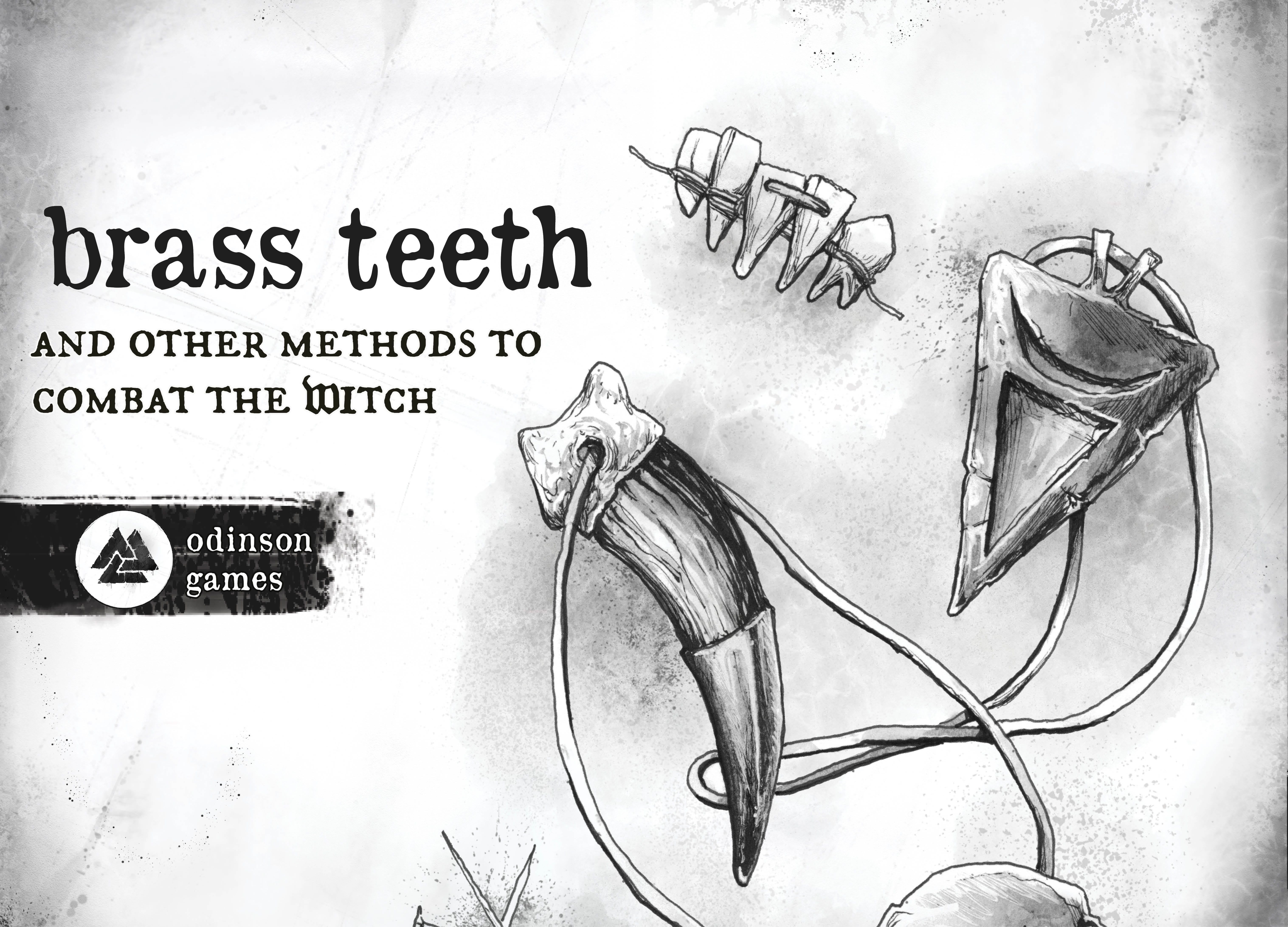
Brass teeth
And other methods to combat the witch

The tl;dr
I’m working on magic in the Wenderweald and ways to counter it.
The magic here is a soft system that no one can control
So anti-magic must be a hard system anyone can use
That takes form as a gamable item: Brass Breakers
And I got free rules for you in a PDF
Simple questions spark big ideas
Recently in my discord, we discussed mining in the Wenderweald. It’s limited and low, low tech, but essential to harvesting tin and copper for brass.
Witches can’t hex brass.
That rapidly spun out into an unhinged, escalatory frenzy of ideas culminating with this:
“What if someone had brass teeth a la Chris Walken in Sleepy Hollow?”
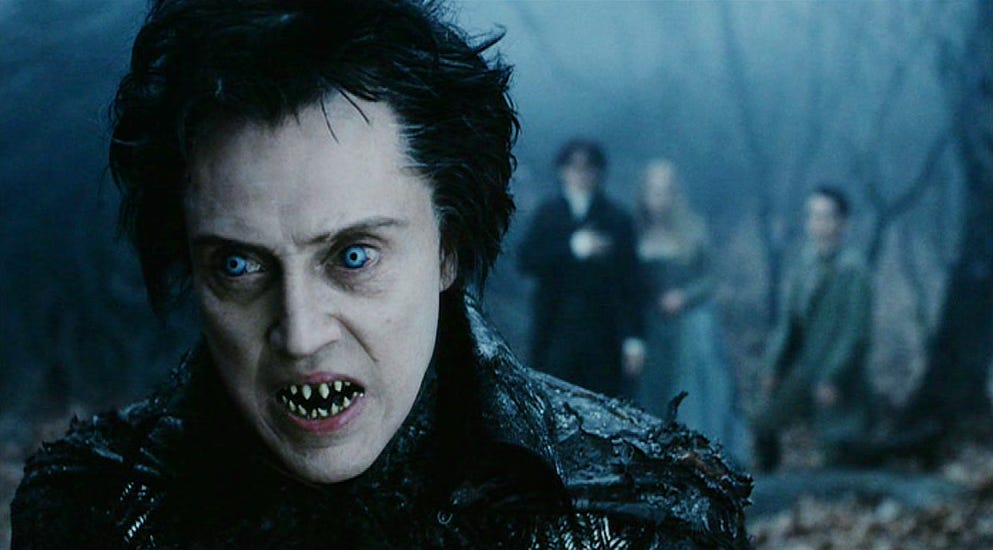
I spiraled from there:
What kind of sick oral surgeon does this?
Do witches keep the teeth as trophies?
Does brass poison you like cobalt?
So I had to get to work, obviously.
You can support my work for free just by subscribing.
The science of anti-magic
Magic in the Wenderweald differs from Vancian magic and other, harder systems. There are few measurable inputs and inconsistent outputs for hexes because the magic itself is unique to the witch who conjurs it.
That’s by design. I like my magic to be weird and mysterious.
Hard magic works really well in a world that relies on magic to solve problems. Places like Dying Earth and Hogwarts illustrate this well.
But the Wenderweald is just the opposite. Magic is an existential threat because it’s unknowable and ungovernable. Definitionally, it defies physics, reason, and human decency. And while we’re thrilled at the prospect of boiling someone’s blood with a hex, one can be forgiven for fearing such horror.
To hammer that theme, I want my anti-magic (such that it exists) to be scienctific and measurable — in a word: reliable.
Brass breakers are my built-in saves against magic.
This borrows from the traditional apotropaic metal in our own world. In the Wenderweald, brass doubles as a game mechanic and as a social symble that can open doors or close them forever depending on which side of the walls you’re on.
They’re designed to work simply and reliably both for players and their characters.
How brass breakers work
Each is represented by a d8 to start. Whenever a player encounters a hex, they can choose to activate their brass breaker by rolling the die. On a 4+, the hex fails and takes no effect.
The next time they roll, the die steps down to a d6, but still needs a 4+ to mute the hex. Then it drops to a d4, and you’ll find yourself in real trouble when it finally fails.
You can try them out for yourself with the PDF below:
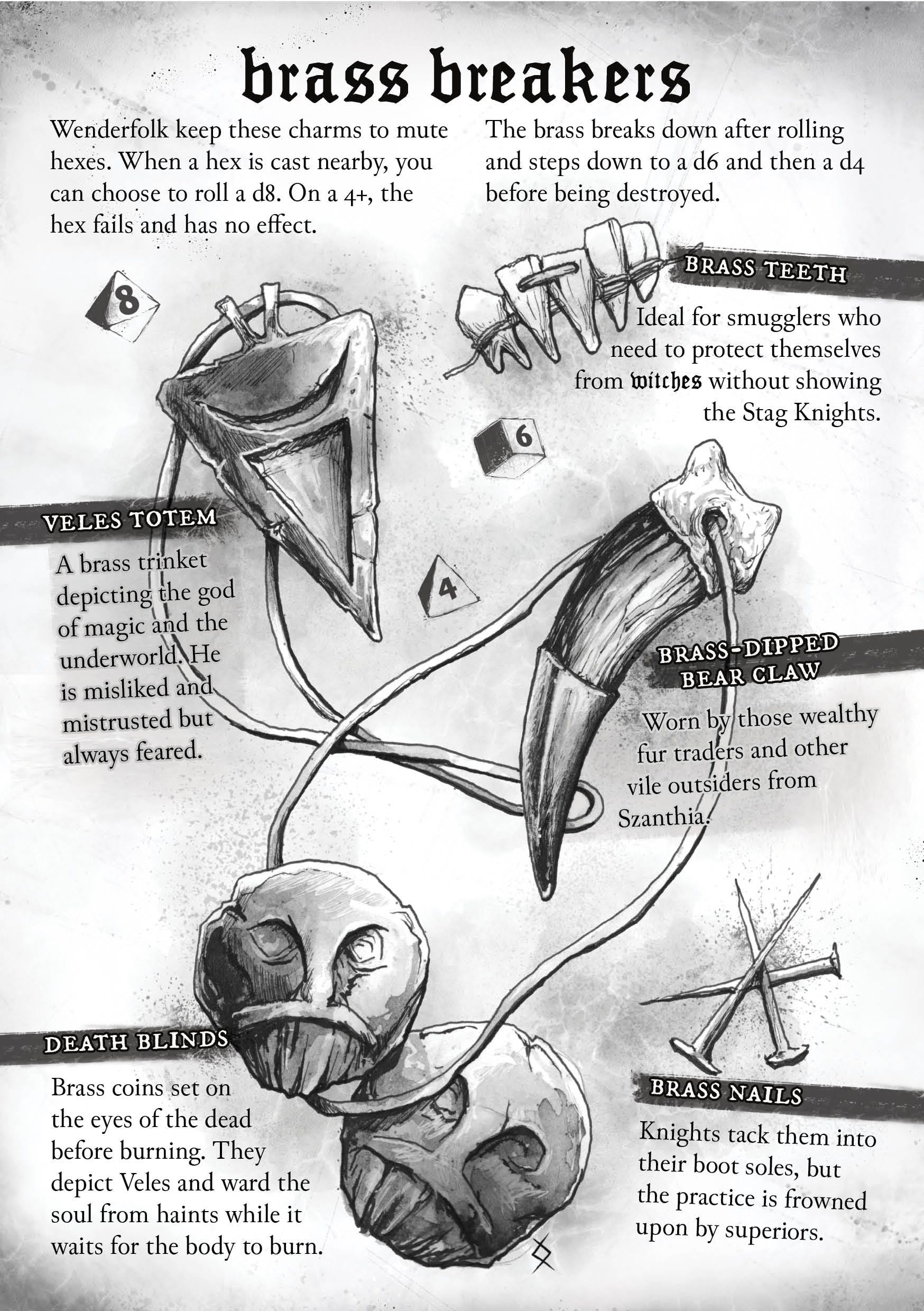
Here’s the PDF to download

If you want to talk more about brass teeth, here’s a link to the Discord.
Watch for the Wenderweald watching.
—Odinson
Great idea! I have smtg similar in my world but it has still to be designed in detail... one clarification though: once the brass item has reached the last die-step and has played against the hex, does the brass get exausted and cannot be used anymore?
GOD IT'S SO GOOOOOD.
I love playing in this tension between the weird/untameable and the "scientific." In my setting, magic has *just* started to become "tameable" in academic settings, but it's shadowed by the fact that (1) nothing a magus can do is anywhere close to what the servant of a god can do, and (2) it's pretty clear that "magic" is somehow pillaged from the gods and everyone who suspects as much is terrified of what the ultimate repercussions will be. The real mystery is how these heretics/occultists managed to "domesticate" magic outside of a divine context in the first place, and this uncertainty creates a kind of arms race between the servants of the gods and those who would, by unknown means, reverse-engineer their domains.
Anyway, I love this, I love the vibe, I love the simplicity, and I love the specific binary it sets up. I feel like that just doesn't get explored often enough in fantasy games and I want more of it.